Managing design files is a daily grind for engineering teams
PLM struggles to ingest design data when mechanical and electrical engineers use different computer-aided design (CAD) and product data management (PDM) tools. Files are scattered across systems and shared drives with no easy way to find them or verify versions. The end result is engineers spending more time reconciling versions, fixing conflicts, and chasing clarity instead of designing products.
Version Confusion
Design teams relying on shared folders and naming conventions often overwrite CAD files, creating major rework.
Disconnected Domains
In larger teams, mechanical CAD (MCAD) and electrical CAD (ECAD) designs evolve in silos, hindering collaboration.
Innovation Bottlenecks
Swivel chair data entry (manually moving data from CAD to PLM) makes maintaining a coherent product thread next to impossible.
Enterprise Blindspots
Many teams cannot share design information across the value chain, creating huge blind spots, especially in sourcing and production.

What is Design Hub?

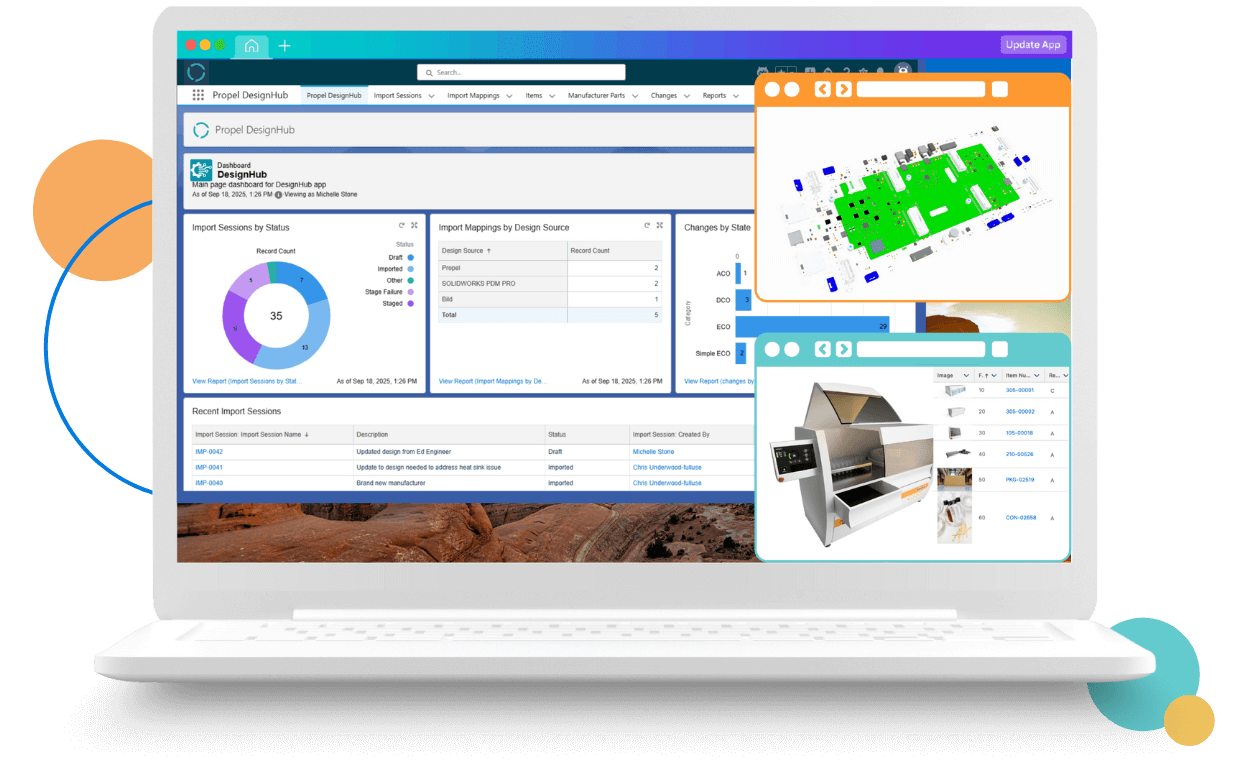
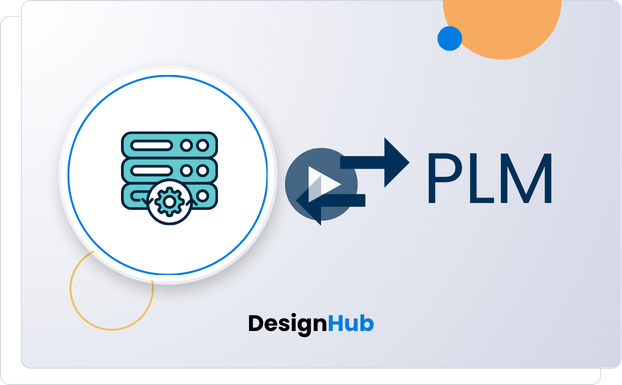
Design Hub is Propel’s CAD-PLM integration solution. It connects MCAD, ECAD, and PDM systems to Propel PLM and syncs parts, BOMs, files, and approved manufacturer lists (AMLs) into the Propel product record. It also triggers Propel review and release workflows. It works with shared folders, on-prem PDM, or cloud CAD tools, so engineers can keep working in their current design environment.

How it works

Integrate with shared folders, on-prem PDM, or cloud CAD tools, either MCAD or ECAD.

Automatically assign part numbers and update files, BOMs, and AMLs.

Seamlessly trigger Propel workflows for review, release, and cross-team collaboration.
What is CAD PLM integration?
CAD PLM integration connects the design tools engineers work in to the product lifecycle management (PLM) system. Parts, BOMs, files, and approved manufacturer lists (AMLs) move into the product record without manual re-entry or file overwrites in shared folders. Design data from mechanical (MCAD) and electrical (ECAD) tools reaches PLM through governed, traceable releases. Ideally, this holds whether teams use cloud CAD, an on-prem PDM, or no PDM at all.

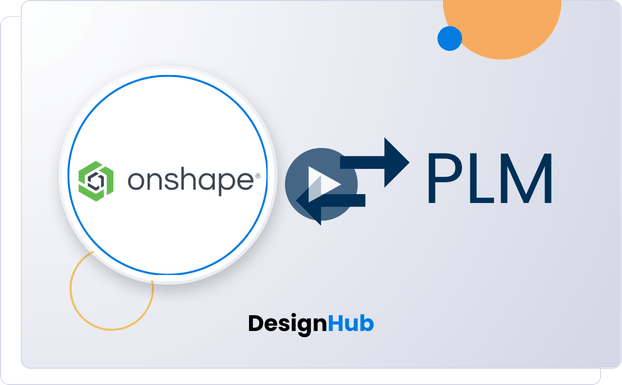
Propel Design Hub delivers this. It syncs parts, BOMs, files, and AMLs directly into the Propel product record, automatically assigns part numbers, and triggers Propel workflows for review and release. It supports SolidWorks, Onshape, Creo, Altium, and other CAD tools, plus PDM systems such as Windchill, Autodesk Vault, and Teamcenter. Engineers keep their current tools. Product, IT, sourcing, production, and other downstream teams work from a shared product record with versions they can verify.

Collaborate Seamlessly, Whatever Your Design Setup

A Look Inside Design Hub
Watch our webinar for an in-depth look at how Design Hub transforms design data collaboration, led by the expert insiders who created it.
WATCH NOW
FAQ
Is Design Hub a separate add-on or an extra cost?
Design Hub is not a separate add-on, but it does come at an additional cost. Pricing varies based on which integrations you need and how many are implemented. For more information, contact us here.
Which teams benefit from Design Hub and how?
Mechanical and electrical engineers: Release BOMs and files from your CAD tool, pull part numbers in context, and stop re-entering data in PLM by hand.

‍Product teams: Work from an accurate product record that includes design data, with versions you can verify.

‍IT teams: Integrate through standard templates, configurable workflows, partner connectors, and APIs. No server setup is required for teams without a PDM.

Everyone downstream (sourcing, production, quality, compliance, marketing, sales, and service): Design Hub releases design data into the Propel product record through governed, traceable workflows. Teams outside engineering work from the same product record, with versions they can verify, instead of hunting through shared drives.
How does Design Hub interface with SOLIDWORKS?
Design Hub connects to SOLIDWORKS through an import session, where you can export data directly or by using Propel’s APIs for a seamless, automated integration.

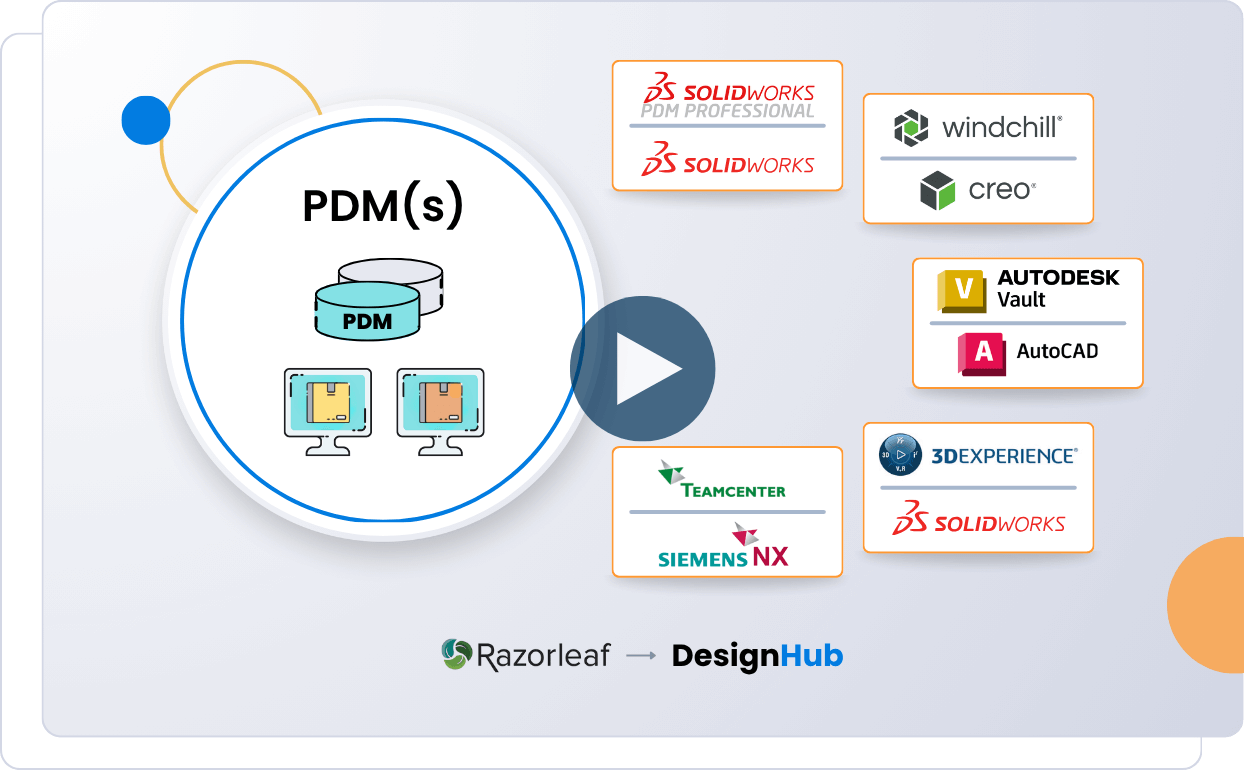
If you are using SOLIDWORKS PDM Professional, check out our direct integration via our partner Razorleaf. In addition, if you would like to add a PDM to your workflow check out our cloud PDM integration with Bild.
Do I need a PDM to use Design Hub?
No. Teams can start using Design Hub without a PDM in place. BOM structures and supporting attachments can be added to Propel through import sessions or directly via APIs. Our partner Bild is a great option if you’re also looking for a cloud-based PDM solution.
How does Design Hub work with existing PDM systems?
If you already use an on-prem PDM such as SOLIDWORKS PDM Professional, Windchill, or Autodesk Vault, Design Hub integrates directly with those systems to streamline the flow of data and maintain full traceability. Powered by our partner Razorleaf and their powerful CLOVER platform.
What about ECAD design data?
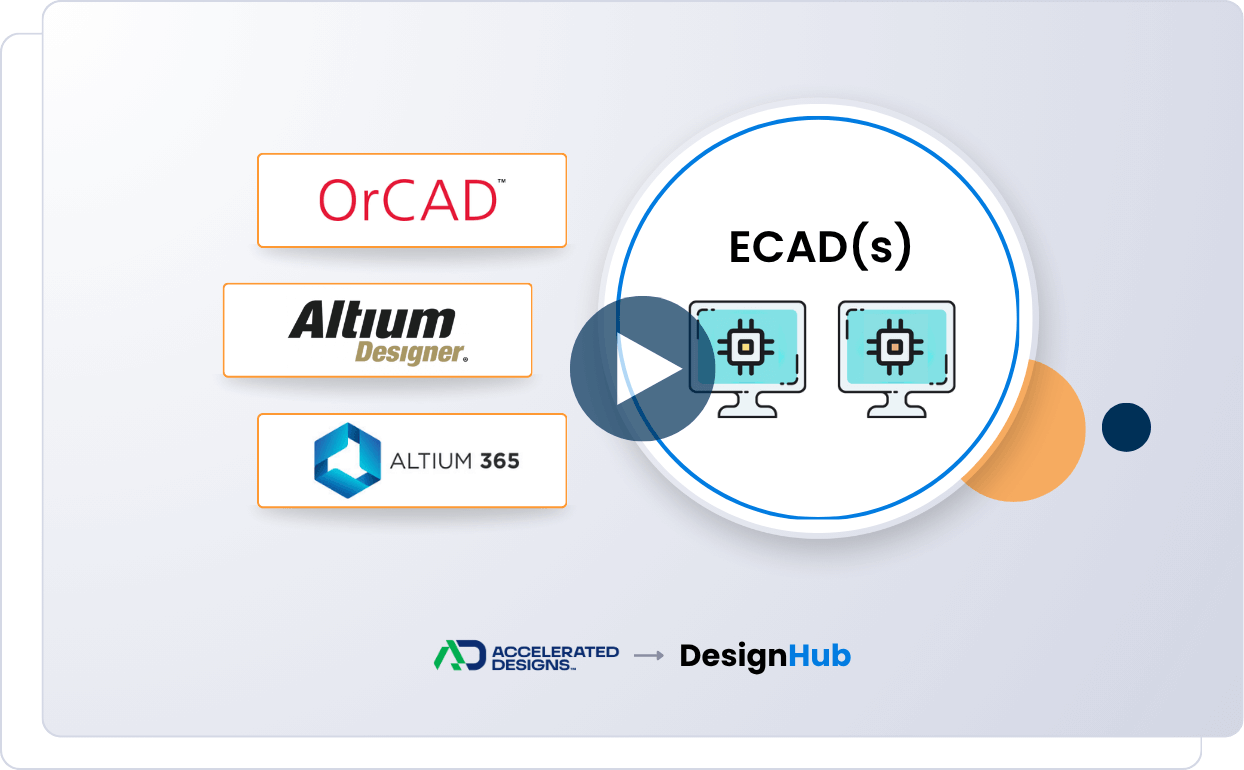
Design Hub includes native integration for ECAD tools, powered by our partner Accelerated Designs. You can pull part numbers, push releases, and configure which design data is shared with Propel for complete visibility and governance.
Which systems does Design Hub connect to?
Design Hub supports a wide range of MCAD, ECAD, and PDM systems through its partner ecosystem and API framework, allowing teams to integrate design data without changing their existing tools.

‍MCAD Tools:
SOLIDWORKS, Onshape, Creo, Inventor, AutoCAD, NX, Solid Edge, CATIA
‍
‍ECAD Tools:
OrCAD, Altium Designer, Altium 365

‍PDM Systems:
SOLIDWORKS PDM Professional, Windchill, Autodesk Vault, Teamcenter, 3DEXPERIENCE

Design Hub’s flexible architecture also supports expansion through APIs and partner connectors, enabling future integrations as your toolset evolves.