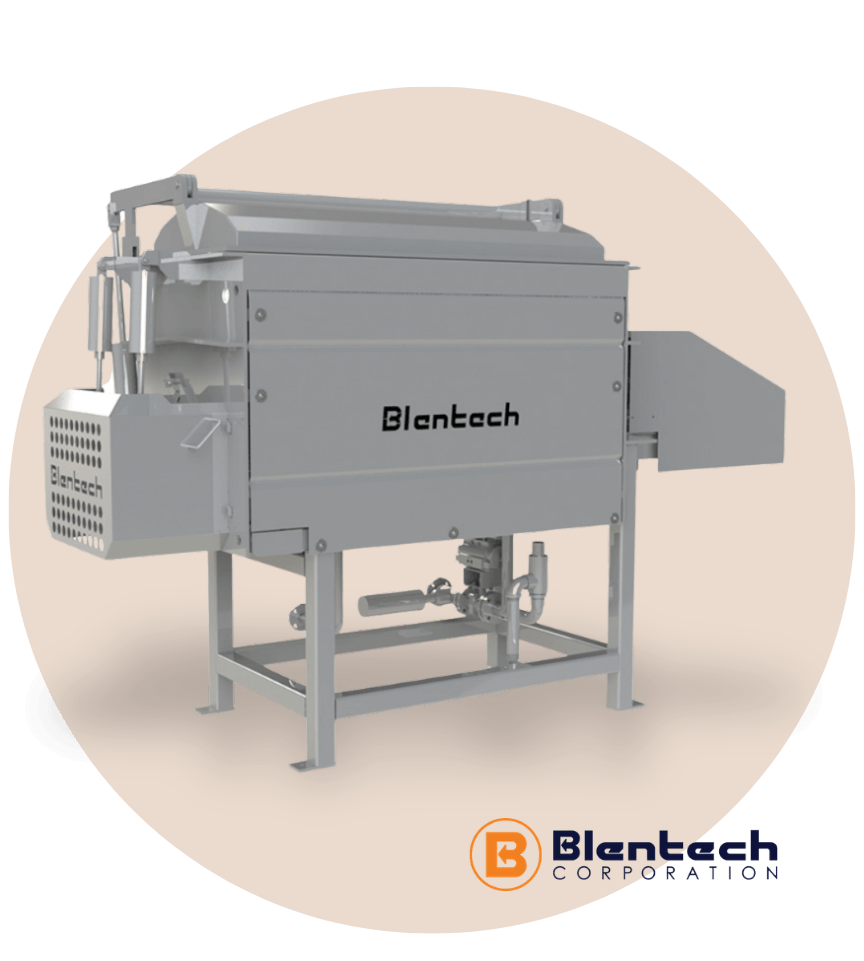
Built for Industrial Equipment

Accelerate custom equipment development, reduce change cycle times, and connect CAD data to field service on a unified product thread.
Take Product tour
Trusted By

Complex Products Demand Airtight Product Data

What is PLM + QMS for industrial equipment manufacturers?
Industrial equipment manufacturers build complex, custom-configured assemblies with long field service lifecycles and multi-tier suppliers. Engineering change, BOM governance, and supplier quality form the operational backbone. Propel unifies those workflows on a cloud-native platform, so modern manufacturers can accelerate development and maintain full field traceability.
Complex BOM and Change Management
Hierarchical BOMs, configurable change workflows, and redline comparison tools keep multi-discipline engineering teams aligned and change cycles short across every product configuration.
Supplier Quality & Traceability
Approved vendor lists, supplier scorecards, CAPA workflows, and full audit trails give you end-to-end visibility into every part source and supplier relationship.
Faster Quote to Revenue
Connecting engineering data to CPQ and sales workflows lets industrial manufacturers quote accurately, close faster, and commission products with fewer errors in the field.
How a Unified Platform Accelerates Industrial Innovation
From complex BOM management to supplier quality and CPQ accuracy, Propel delivers the unified product workflows industrial manufacturers need to build and deliver at scale.
BOM Management
Manage multi-level assemblies with indented BOMs, inline redlines, and AML integration to keep builds on track.
LEARN MORE
Change Control
Automate engineering change orders with configurable workflows and approver rules, reviewable from any device.
LEARN MORE
Supplier Management
Extend quality workflows and BOM collaboration across your supplier network for full traceability and on-time delivery.
LEARN MORE
NCMR
Capture non-conformances, investigate root cause, and drive corrective action with automated quality workflows.
LEARN MORE
CPQ Accuracy
Connect engineering specs to quoting workflows so industrial sales teams configure, price, and quote with confidence.
LEARN MORE
Native Agentic AI
AI agents detect component risk, recommend replacements, and send approvals for change orders.
LEARN MORE
Girtz Industries: 20% Faster Quote to Revenue
View All Customer Stories
Powering custom engineering
Girtz Industries builds custom-engineered power systems and needs to unify engineering, sales, and finance data. With Propel PLM, they cut monthly close from 5 days to 1 day and boosted reporting efficiency by 50%.
see their story
View All Customer Stories
Concept To Customer Solutions for Fast-Moving Product Companies
Propel PLM
Cloud-native, role-based, and easy-to-use product lifecycle management enables enterprise-wide collaboration so teams work smarter, faster, and better together.
how it works
Propel QMS
Complete quality management system that unifies part, process, and supplier quality to deliver safer products, higher customer satisfaction, and increased profits.
how it works
Component Insights
Supply chain intelligence surfaces component risk, availability, and compliance in your BOM so teams make smarter sourcing decisions before products are built.
how it works
FAQ
Does Propel support CAD integration for mechanical and electrical design tools?
Yes. Propel Design Hub connects directly to the MCAD tools industrial equipment teams rely on, including SolidWorks, Creo, Inventor, AutoCAD, NX, Solid Edge, and CATIA, as well as ECAD tools like OrCAD and Altium. It also integrates with PDM systems such as Windchill, Autodesk Vault, Teamcenter, and 3DEXPERIENCE. When engineers push designs from their CAD environment, Design Hub assigns part numbers and syncs BOMs and AMLs into the Propel record. That eliminates the manual re-entry that slows down engineering teams and introduces version errors.
How does Propel handle engineer-to-order or configure-to-order product lines?
Propel PLM manages multi-level, hierarchical BOMs with revision comparison and redline visualization, which makes it practical for complex, custom-configured assemblies. Propel PIM extends that with SKU variant management using multi-level parent-child inheritance, so a single root-level change propagates downstream to all configured variants automatically. To ensure quoting accuracy and speed, Propel connects product development data directly to sales and marketing workflows on the same platform.
Does Propel connect engineering change data to field service teams in real time?
Yes, through two mechanisms. Product Spotlight surfaces curated product data, including BOMs, item revisions, serialized Asset history, and work instructions, directly inside Salesforce Sales Cloud, Service Cloud, and Manufacturing Cloud so field technicians have the right information at the point of service.

Propel One agentic AI goes further: it predicts cost and serviceability impact from a change order, pulling from BOM, AML, and in-service Asset data, then notifies Field Service via Slack when a change is released. That closes the loop between engineering and field teams without manual handoffs.
How does Propel PLM compare to on-premise systems?
The core difference is architecture and speed to value. Legacy on-premise PLM systems were built for large enterprises with dedicated IT teams, long implementation cycles, and high configuration overhead. Propel is cloud-native, built on Salesforce infrastructure, and deploys in weeks rather than months or years. That matters for industrial equipment manufacturers who need to respond to market changes quickly and can not afford multi-year deployment timelines. Propel also unifies PLM, QMS, and PIM on a single data model, so product, quality, and commercial teams work from the same record without custom integrations between separate systems.
What AI capabilities does Propel offer for industrial equipment workflows?
Propel One delivers natively integrated agentic AI across the platform. For industrial equipment teams, the most relevant capabilities are expediting changes by agentically reviewing all affected items, changes, and documentation tied to a change order; change analysis by predicting cost and serviceability impact for both in-development and fielded equipment; and document interrogation, allowing engineers and service technicians to converse with complex product documentation. All AI automation runs within your existing Propel permission sets, so nothing executes outside the security and governance guardrails your team has already established. Explore Propel One here.