Project Deliverables Management

Connect every deliverable, change, and design output on a unified product thread so teams hit milestones faster with full visibility.
Get the demo
On-Time Delivery Starts With Connected Project Data
What is Project Deliverables Management?
Project deliverables management is the process of defining, tracking, and completing all required outputs across product development phases, from design specs and prototypes to BOMs, test records, and change orders. Each deliverable must be owned, gated, and traceable to product data. Propel gives modern manufacturers a unified system to manage deliverables directly alongside the product records they represent.
Cross-Team Visibility
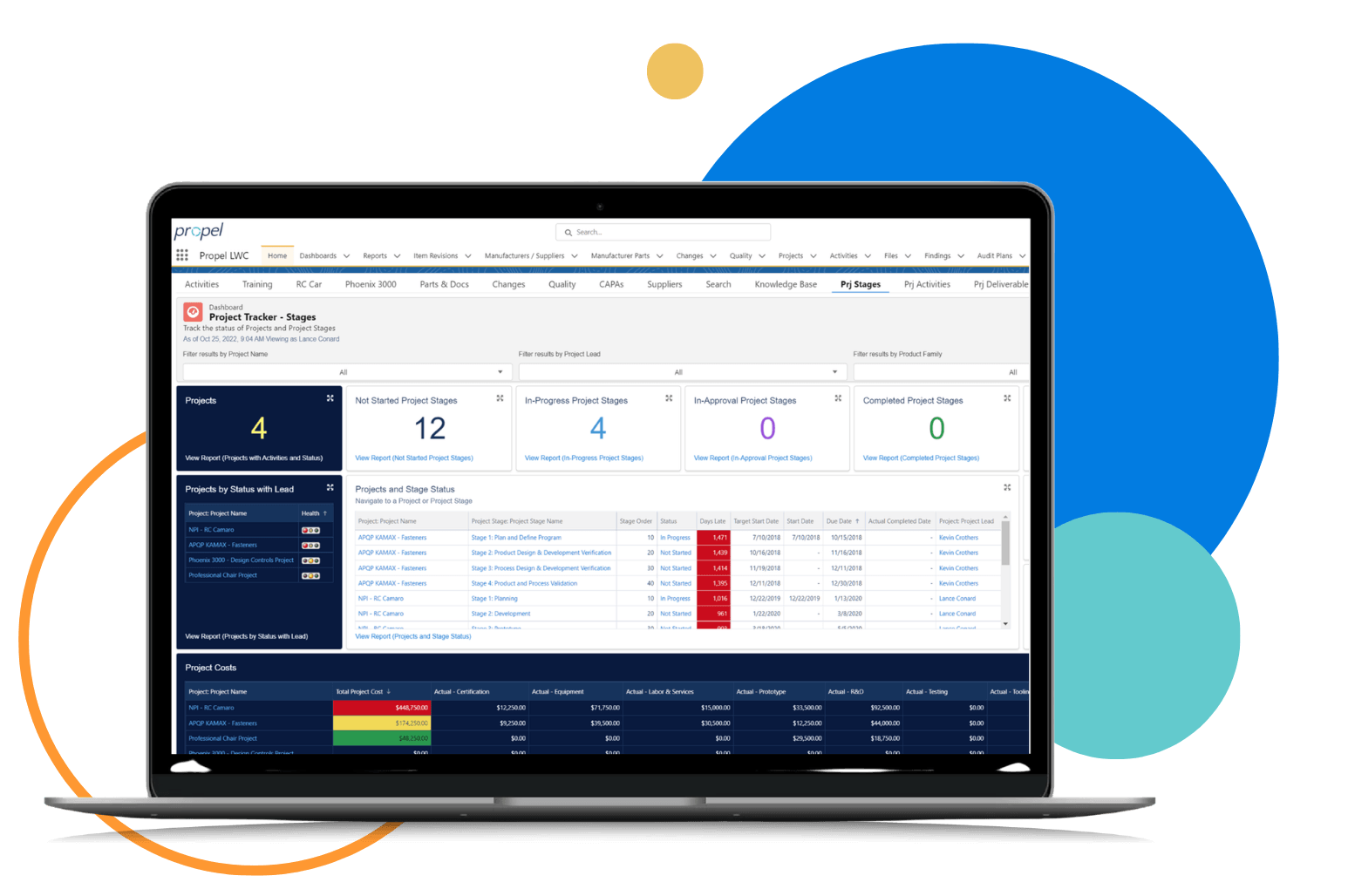
Real-time project visibility across stages and activities keeps all stakeholders aligned on deliverable status, ownership, and due dates without status-meeting overhead.
Traceable Deliverables
Linking deliverables directly to all of your product data, such as assemblies, change orders, and first-article inspections, means every output connects to the product data it affects.
On-Time Milestone Execution
Dependency management and timeline views let project managers sequence deliverables precisely, so schedule shifts cascade predictably across the full plan.

Propel Keeps Every Deliverable Connected to the Product

A Single Project Hub
Propel consolidates every project stage, activity, and deliverable into one place, giving all stakeholders on-demand visibility into task ownership, status, and due dates. No context-switching across spreadsheets or disconnected tools required.
Deliverables Tied to Product Data
Each deliverable in Propel carries a Key Items tab where owners relate Items, Changes, Quality Records, User Needs, Requirements, and Declarations directly to the output being tracked. Teams see open changes, lifecycle phase, and key tasks from a single record.
Intelligent Timeline Management
Gantt and Kanban views give project managers flexible control over deliverable sequences, with dependency logic that shifts dates automatically when upstream milestones move. Propel One's agentic AI further automates status updates and approval workflows to accelerate completion.
learn more
See Propel's unified platform in action
You already have the product data. See what becomes possible when it's all connected.
Take product tour
More Capabilities
Modern, User-Friendly Experience
Track deliverables by status with drag-and-drop board views and Gantt charts. Filter by progress stage or due date to keep project managers focused on what needs immediate attention across the project portfolio.
Deliverable Dependencies
Set start and completion dependencies between deliverables to model gating relationships. When an upstream deliverable shifts, Propel automatically adjusts dependent deliverable dates throughout the project plan.
Key Items Traceability
Each deliverable's Key Items tab connects related Items, Changes, Quality Records, User Needs, Requirements, and Declarations in one view. Teams see revision, lifecycle phase, and open change activity tied directly to the output being delivered.
Out-of-the-Box Templates
Launch every new project with the right Stages and Activities already in place using Propel's built-in Project Templates, so teams hit the ground running instead of rebuilding structure from scratch. Configure a Default Project Template per Category so the right plan auto-generates the moment a new product initiative kicks off.
Agentic AI
Propel's agentic AI suite, Propel One, automates repetitive tasks, streamlines approvals, and surfaces actionable insights for deliverable owners. Role-based AI agents are accessible directly in Slack, keeping teams moving without platform context switching.
Concept To Customer Solutions for Fast-Moving Product Companies
Propel PLM
Cloud-native, role-based, and easy-to-use product lifecycle management enables enterprise-wide collaboration so teams work smarter, faster, and better together.
how it works
Propel QMS
Complete quality management system that unifies part, process, and supplier quality to deliver safer products, higher customer satisfaction, and increased profits.
how it works
Propel One
Natively integrated agentic AI automates workflows, surfaces insights, and accelerates every team across PLM, QMS, and PIM from concept to customer.
how it works
Formlabs Cut Prototype Delivery by 5+ Weeks
View All Customer Stories
One hub for product data, faster delivery
Formlabs replaced disconnected systems with Propel as the unified hub for product data, dashboards, approvals, and change workflows. With 120+ team members onboarded in two weeks and 150+ ECOs released in the first month, Formlabs reduced new product development time by 25% and cut prototype delivery by more than five weeks.
see their story
View All Customer Stories
FAQ
How does Propel connect deliverables to the product records they affect?
Each deliverable in Propel's Projects module includes a Key Items tab where owners relate Items, Changes, Quality records, and Declarations directly to that deliverable. Teams can view revision, lifecycle phase, and open change activity without leaving the project record, keeping product data and project execution on a single unified product thread.
Can Propel manage dependencies between deliverables across project phases?
Yes. Propel's deliverable dependency feature lets project managers set start and completion gates between activities. When an upstream deliverable's end date shifts, dependent deliverables adjust accordingly. Gantt and Kanban views provide visual confirmation of schedule impact so teams can respond before delays compound across the program timeline.
How does Propel's AI support project deliverables management?
Propel One, Propel's agentic AI suite, automates repetitive tasks like status updates and approval routing for deliverable owners. Role-based AI agents surface actionable insights and keep workflows moving, accessible directly in Slack, so teams spend less time on coordination and more time driving deliverables to completion. Explore Propel One.