Component Risk Management

Keep your supply chain resilient at all times with real-time intelligence across every component, supplier, and BOM.
Get the demo
One At-Risk Component Can Ground an Entire Product Line
What is Component Risk Management?
Component risk management is the continuous process of identifying, assessing, and mitigating supply chain threats at the part level, including obsolescence, shortage, regulatory non-compliance, and manufacturer changes. Propel synchronizes supply chain insights to BOM data, so modern manufacturers catch risk before it becomes a production crisis.
Real-Time Risk Visibility
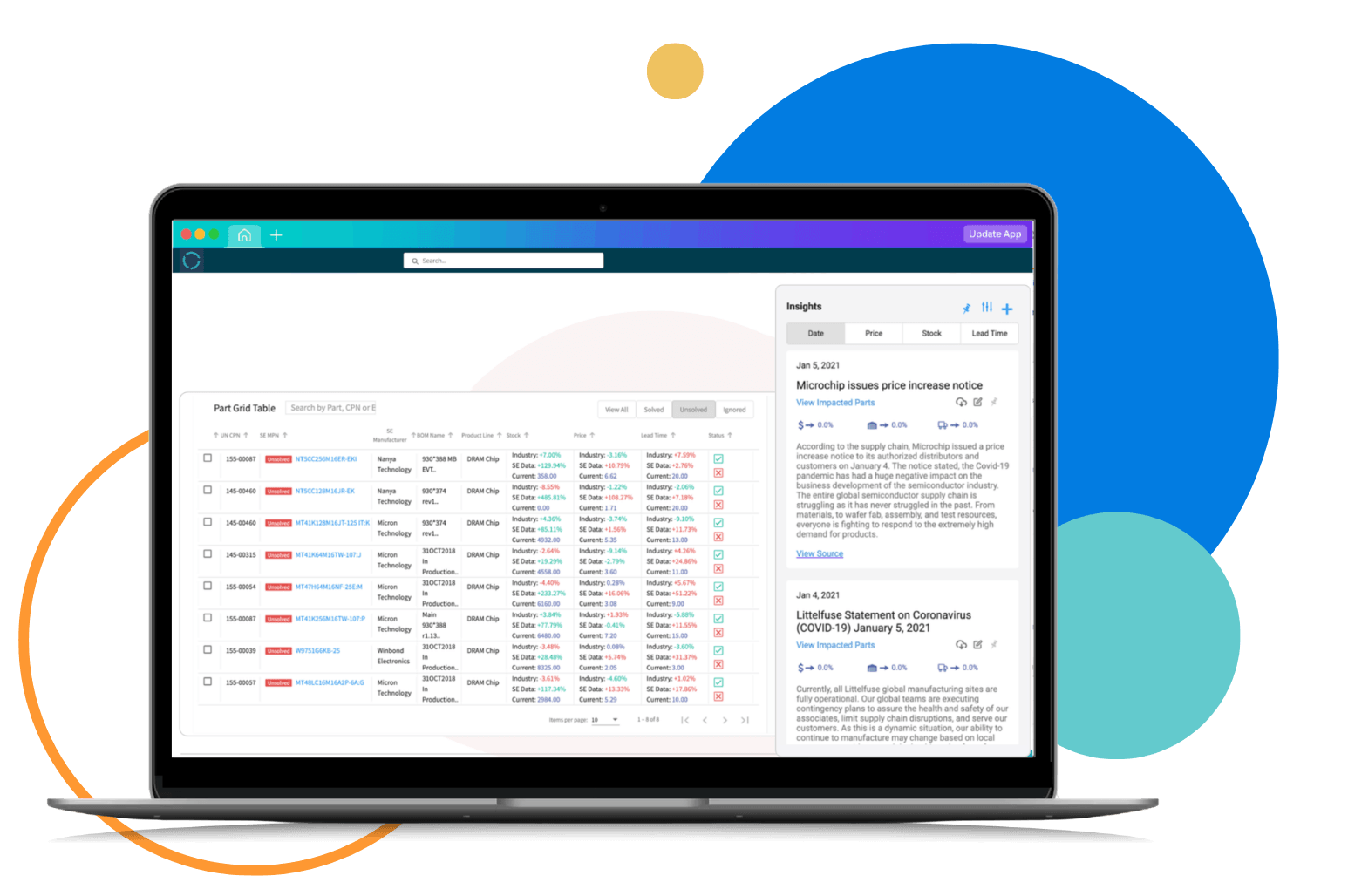
Continuous monitoring of availability, obsolescence, and PCN data across the full BOM keeps engineers and supply chain teams working from the same current picture.
Approved Source Control
Clear lifecycle status for every approved source, from engineering-approved to conditionally qualified to disqualified, makes risk explicit, auditable, and actionable before a design is released.
Change-Driven Response
Structured engineering change workflows that connect the flagged component to affected BOMs, substitute parts, and cross-functional approvals ensure that mitigation happens in days rather than quarters.

Propel Connects Component Intelligence to Every Decision

Automated Risk Scoring
Propel's Component Insights connector, powered by SiliconExpert's database of 1B+ parts across 15,000+ manufacturers, syncs daily to score every component in your BOM on obsolescence, availability, and compliance. Risk changes surface automatically—no manual lookups required.
learn more
AML/AVL Lifecycle Control
Approved Manufacturer and Vendor Lists are managed at the item revision level inside Propel, with explicit lifecycle phases—Approved, Conditional, Disqualified, Obsolete—so every team sees the real risk status of every source and design teams can't build on disqualified parts.
ECO Response
When a manufacturer product change notice (PCN) lands, Propel connects it directly to affected BOMs and launches a configurable change workflow. Engineering, sourcing, and quality teams work from unified product data so substitutions are evaluated, approved, and released without coordination lag.
See Propel's unified platform in action
You already have the product data. See what becomes possible when it's all connected.
Take product tour
More Capabilities
Compliance Data Linking
RoHS, REACH, SCIP, and Conflict Minerals compliance data is tied directly to components in Propel so non-compliant parts are flagged before they reach a released BOM. Risk and compliance are evaluated together, not as separate processes.
BOM Redlining and Where-Used
Propel's BOM management tools let teams compare revisions, visualize redlines, and instantly see every product affected by a risky or obsolete component, all in real time. Where-used analysis turns a single part flag into a full picture of design exposure across all products.
Substitute Part Surfacing
When Component Insights identifies a high-risk part, it proactively surfaces low-risk cross-reference and replacement parts from the SiliconExpert database for AML review. Engineers get qualified alternatives alongside the risk alert, accelerating the path to a safe replacement.
Supplier Qualification
Propel manages the full supplier and manufacturer qualification lifecycle, including onboarding evaluation, audit records, and periodic re-evaluation. When a component risk event implicates a source, the qualification history is already in the same system as the BOM.
Supplier Quality Workflows
CAPA and SCAR workflows in Propel QMS close the loop when a risky or non-conforming component drives a quality event. Supply chain risk and quality response are connected through the same unified product data.
Concept To Customer Solutions for Fast-Moving Product Companies
Propel PLM
Cloud-native, role-based, and easy-to-use product lifecycle management enables enterprise-wide collaboration so teams work smarter, faster, and better together.
how it works
Component Insights
Supply chain intelligence surfaces component risk, availability, and compliance in your BOM so teams make smarter sourcing decisions before products are built.
how it works
Propel One
Natively integrated agentic AI automates workflows, surfaces insights, and accelerates every team across PLM, QMS, and PIM from concept to customer.
how it works
Formlabs Released 150+ ECOs in Their First Month on Propel
View All Customer Stories
Supplier control and rapid onboarding
Formlabs unified PLM, QMS, and supplier collaboration on Propel and moved fast from day one, onboarding 120+ people in two weeks and releasing over 150 engineering change orders in the first month. Their CIO credited Propel with giving them control over supplier access while enabling rapid onboarding of new sources.
see their story
View All Customer Stories
FAQ
How does Propel's Component Insights integration differ from its native AML/AVL capability?
AML/AVL management is a core, native capability in Propel PLM—tracking approved manufacturers, lifecycle status, and source history at the item revision level. Propel Component Insights is an optional capability, which, when paired with SiliconExpert, extends that foundation with daily automated syncing of live market data and obsolescence scoring across 1B+ parts. Explore Component Insights.
How does Propel connect a component risk event to an engineering change?
When a component is flagged as high-risk, Propel links the affected BOMs through where-used analysis and enables a configurable change workflow to be launched directly. Engineering, quality, and sourcing teams collaborate on the ECO using shared product data, so alternatives evaluation and approval happen in a single, connected process rather than across disconnected tools or email chains.
Can Propel help prevent obsolete components from entering new designs?
Yes. Propel's item lifecycle phases allow obsolete-status components to be visually flagged and, depending on configuration, restricted from being added to active BOMs. Combined with daily risk score updates from Component Insights, design teams have a real-time signal at the point of selection, before a risky part is ever designed in.