Design Reuse

Find, evaluate, and reuse proven designs and components faster with unified product data that connects cost, quality, and supply chain intelligence.

Get the demo
Smarter Component Reuse Starts With Connected Product Data
What is Design Reuse?
Design reuse is the engineering discipline of identifying and incorporating existing components, sub-assemblies, specifications, and product BOM structures into new designs rather than creating from scratch, reducing cost, compressing timelines, and leveraging proven supply chain relationships. Without a unified, searchable record of what already exists, companies lose sight of the product knowledge they already own. Propel gives modern manufacturers the intelligence layer, connected product data, and AI-powered tools to find, compare, and confidently reuse existing designs at scale.
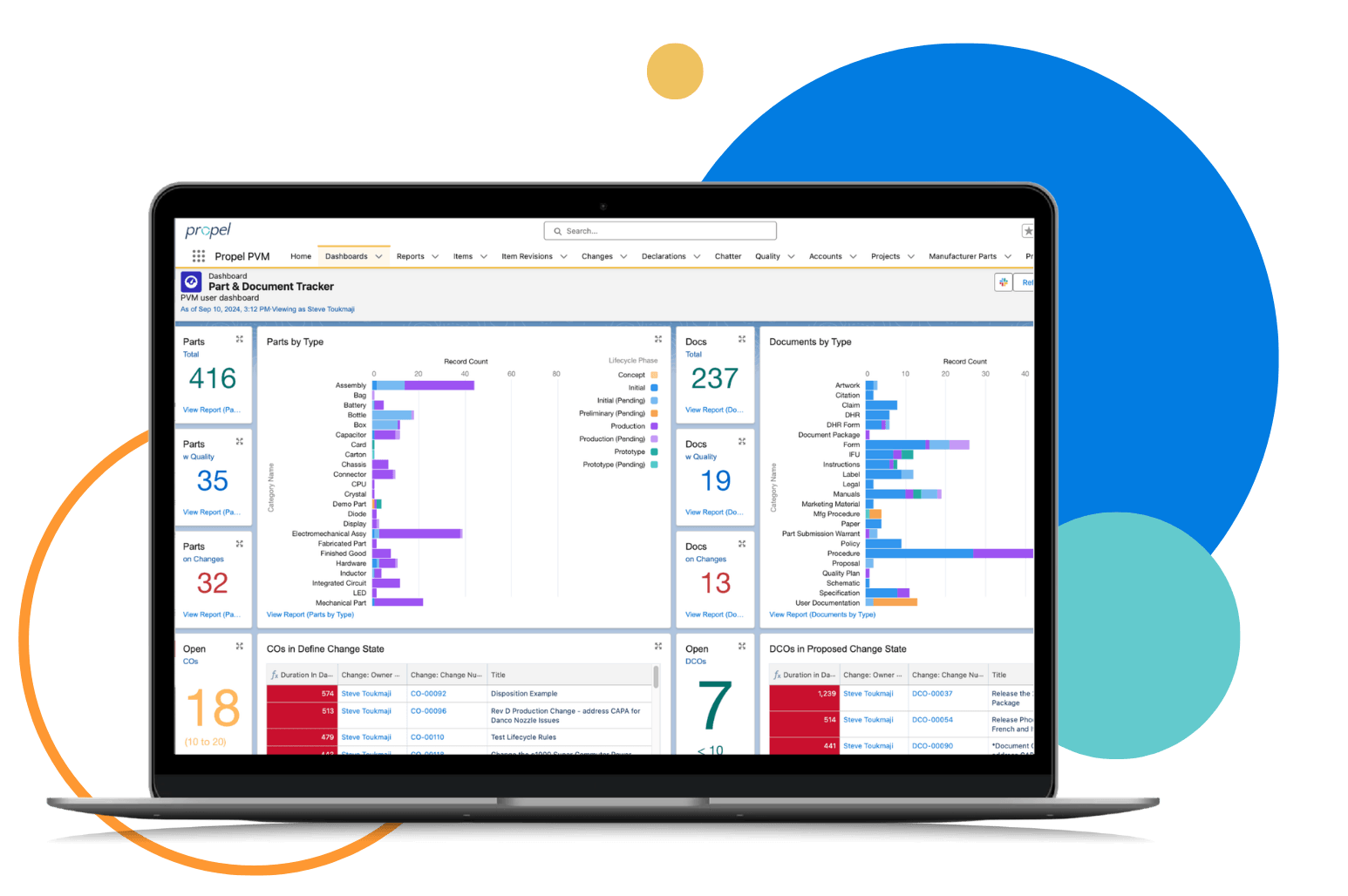
Part Findability
A unified, searchable component library lets engineers surface equivalent and substitute parts, compare performance and cost, and make confident reuse decisions before the first line is drawn.
Reuse Impact Visibility
Knowing Where-Used for every part that lives across active assemblies lets teams reuse with full downstream awareness of its usage and avoid unintended changes to production builds.
Supply Chain Intelligence
Reusing approved components with known cost, quality scores, and compliance status accelerates sourcing decisions and reduces supplier qualification risk from day one.

Propel Turns Existing Designs Into Competitive Advantage

Find Before You Build
Propel's parametric search scans Items, Revisions, Changes, and category-specific fields so engineers locate matching components in seconds. Visual Collaboration renders interactive 3D viewables that can be spun and cross-sectioned without a native CAD license, so any engineer can evaluate an existing design for reuse potential on the spot.
learn more
Reuse With Full Context
Where Used surfaces every immediate and top-level parent assembly for a given part, complete with revision, phase, quantity, and BOM notes, so engineers understand full downstream impact before committing to reuse. Bulk replace actions and lifecycle phase filtering, including the ability to exclude obsolete parents, keep those decisions fast and clean.
learn more
Accelerate With AI
Propel One agentic AI lets engineers reuse and reconfigure entire product BOM structures in seconds, directly automating the most time-intensive step in design reuse workflows. Deep BOM cloning makes proven designs the starting point instead of rebuilding assemblies from scratch.
learn more
See Propel's unified platform in action
You already have the product data. See what becomes possible when it's all connected.
Take product tour
More Capabilities
AML/AVL Management
Tracks preferred and alternate status, historical cost, volume, and on-time delivery for approved components. Engineers can identify already-qualified parts during reuse evaluation, cutting supplier qualification overhead and reducing the risk of introducing unvetted components into a new design.
BOM Management
Supports multiple BOM views, draft BOMs, revision comparisons, and real-time redlines, with contextual communications tied directly to the product record. Teams access design history, tribal knowledge, and sub-assembly context in one place, making it easier to identify and confidently reuse proven structures.
Cost Rollup
Tracks and rolls up material, prototype, labor, and supply chain costs across the full BOM. Engineers can compare the cost impact of reusing an existing design versus building new, supporting smarter, data-driven decisions earlier in the development process.
CAD/PDM Integration
Propel Design Hub automatically syncs parts, BOMs, files, and AMLs from MCAD and ECAD tools into a single Propel product record. By eliminating version confusion across disconnected CAD environments, Design Hub makes it practical to find and trust existing designs for reuse.
Supplier Quality Insights
Surfaces quality scores and corrective action history across the supplier base directly in the product record. Engineers can incorporate supplier performance data into component reuse decisions, prioritizing parts sourced from suppliers with the strongest quality and delivery track records.
Concept To Customer Solutions for Fast-Moving Product Companies
Propel PLM
Cloud-native, role-based, and easy-to-use product lifecycle management enables enterprise-wide collaboration so teams work smarter, faster, and better together.
how it works
Design Hub
CAD-to-PLM integration centralizes design data across every tool and team so engineers spend less time reconciling files and more time building great products.
how it works
Propel One
Natively integrated agentic AI automates workflows, surfaces insights, and accelerates every team across PLM, QMS, and PIM from concept to customer.
how it works
Blentech Achieved 50% Design Reuse With Standardized Parts
View All Customer Stories
One source of truth, multiplied design value
Blentech partnered with Propel to build a single, searchable source of truth for every part, assembly, and file across their product portfolio. Design reuse climbed from roughly 10-20% to 50-60%, custom product development velocity increased 20-25%, and onsite commissioning time dropped by 50%.
see their story
View All Customer Stories
FAQ
How does Propel help engineers find existing components before starting a new design?
Propel's parametric search lets engineers query across Item, Revision, Change, and category-specific fields using operators like Contains, Equals, and Between. Combined with Visual Collaboration's interactive 3D viewables, engineers can locate and visually evaluate existing components without leaving Propel or opening a CAD tool, making part discovery a fast, informed step rather than an afterthought. Explore Visual Collaboration.
Can Propel show the downstream impact of reusing a specific component across active assemblies?
Yes. Propel's Where Used capability surfaces every immediate and top-level parent assembly for any given part, including revision, lifecycle phase, quantity, and BOM notes. Engineers can filter out obsolete parents and use bulk Replace actions to apply reuse decisions efficiently, so teams understand the full downstream picture before committing to a change.
How does deep BOM cloning work within Propel?
Propel's deep BOM cloning lets engineers clone and reconfigure entire product structures in seconds, directly automating the most labor-intensive step in design reuse. Starting with proven BOMs means reuse decisions are grounded in existing intelligence rather than tribal knowledge or best guesses.